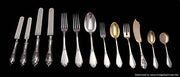
French Sterling Silver Flatware
French Silver Flatware - A Study in Excellence
French sterling silver flatware represents the pinnacle of the silversmith's art, embodying centuries of accumulated expertise, unwavering commitment to quality, and an aesthetic sensibility that has defined luxury dining for generations. From the ateliers of Paris to the tables of royalty, French silver has cultivated a reputation that transcends mere functionality, elevating everyday dining into an experience of refinement and cultural expression.
Uncompromising Quality and Artisanal Craftsmanship
The foundation of French silver's preeminence lies in its relentless dedication to quality and the mastery of its artisans. Unlike mass-produced alternatives, French sterling silver flatware has historically been the product of meticulous handcraftsmanship, with techniques passed down through generations of skilled workers. Esteemed houses such as Puiforcat, Christofle, Odiot, and Cardeilhac have maintained workshops where artisans still engage in the physical choreography of hammering, planishing, spinning, and chasing—gestures performed by the great silversmiths of past centuries. Each piece is crafted from a single sheet of sterling silver, meticulously shaped and polished by hand to achieve a flawless finish. The dedication to craftsmanship is evident in the weight, balance, and finish of each utensil, carefully considered to ensure the final product not only looks beautiful but also feels luxurious in the hand.
The Minerva Standard - Superior Silver Purity
A defining characteristic of French sterling silver flatware is its exceptional purity, which consistently exceeds international standards. While the global benchmark for sterling silver is 92.5% pure silver (the .925 standard), French silversmiths have long favored the superior .950 standard—95% pure silver. This distinction is formally certified through France's rigorous hallmarking system, most notably the Minerva or "Minerve" mark, a profile of a helmeted female warrior. The number "1" appearing beside Minerva's forehead designates .950 purity, while a "2" indicates .800 purity. This higher silver content produces flatware with superior luster, greater resistance to tarnish, and a more satisfying weight that conveys substance and permanence.
Sophisticated Manufacturing Techniques
The creation of French sterling silver flatware involves a sophisticated repertoire of techniques that combine traditional methods with refined artistry. The process begins with silver being melted and cast into ingots, which are then rolled and cut into desired shapes before undergoing meticulous finishing. Among the signature techniques employed by French ateliers are repoussé and chasing—methods of ornamenting metal from both front and back to create raised designs—as well as engraving for intricate detailing.
Design Elements - From Tradition to Modernity
French sterling silver flatware is celebrated for its sophisticated design language, which navigates between historical inspiration and contemporary expression. Patterns range from the ornate, classically inspired motifs of the Rococo and Neoclassical styles to the clean minimalism of Art Deco and modernism. But, these designs extends beyond ornamentation to embrace ergonomic functionality. Handles are carefully proportioned to provide comfortable grip, blades are precision-forged for sharpness, and each utensil is weighted to achieve perfect balance between form and function. This attention to the tactile experience—how the piece feels in the hand—is a hallmark of French craftsmanship that sets it apart. The comprehensive nature of French flatware sets, often including specialized pieces from fish knives to asparagus servers, reflects a culture that elevates dining to a ritual requiring tools as refined as the cuisine they accompany.
Royal Patronage and Prestigious Commissions
The reputation of French silversmithing has been indelibly shaped by its historic association with royalty. From the Bourbon monarchy to the Napoleonic empire, French silversmiths enjoyed patronage that served as both validation and inspiration. Puiforcat was appointed official silversmith to the royal court by King Louis-Philippe in the mid-19th century, a recognition that solidified its status and opened doors to further royal commissions. Christofle became official supplier to the French royal court under Napoleon III, creating elaborate silverware for the grand banquets of the Second Empire.
The Odiot firm enjoyed even deeper royal connections, receiving the title "Fournisseur de l'Empereur" (Supplier to the Emperor) from Napoleon Bonaparte himself. Charles Nicolas Odiot served as official supplier to King Louis-Philippe I and the Orléans royal family, while Jean-Baptiste Gustave Odiot became official supplier of silver to the Czar of Russia. Cardeilhac similarly enjoyed appointments to Louis-Philippe I and Napoleon III. This royal endorsement extended beyond France to include other European monarchies and, remarkably, international commissions such as Odiot's 3,000-piece solid-gold dinnerware set for Sa'id Pasha, the Viceroy of Egypt. The Duke and Duchess of Windsor were known collectors of Puiforcat silver in the 1930s, further demonstrating the enduring appeal of French silver to royalty and aristocracy.
Awards and International Recognition
French silversmithing houses have consistently distinguished themselves at international exhibitions, earning accolades that cemented their global reputation. The Paris Universal Exposition of 1867 awarded gold medals to both Puiforcat and Cardeilhac for their exceptional silverware. Christofle received its first major recognition at the Paris Exposition of 1839 for innovative electroplating, followed by further honors at the Great Exhibition of 1851 in London.
Aesthetic Appeal and Enduring Legacy
The aesthetic appeal of French sterling silver flatware lies in its ability to combine visual beauty with functional elegance. The higher silver content produces a distinctive brilliance and depth of luster that cheaper alloys cannot replicate. Patterns are rendered with exceptional precision, whether featuring the sinuous natural motifs of Art Nouveau, the geometric clarity of Art Deco, or the classical ornamentation of traditional designs. The result is flatware that transcends ephemeral fashion, becoming timeless objects appreciated across generations.
This aesthetic quality is enhanced by the versatility of French designs, which suit both formal banquets and intimate family dinners. The comprehensive nature of flatware sets, often including specialized serving pieces with vermeil (gold-plated) accents, demonstrates an understanding that dining is not merely nourishment but a cultural ritual requiring beautiful implements. The legacy of French silversmithing is preserved not only in private collections but also in major museums including the Metropolitan Museum of Art in New York and the Louvre in Paris. Today, the tradition continues with houses like Puiforcat, now part of the Hermès Group, maintaining their workshops while engaging in creative dialogues with contemporary artists and designers. This balance between heritage and innovation ensures that French sterling silver flatware remains not a relic of the past but a living tradition, continuing to define the art of fine dining for new generations of connoisseurs.
At online silver store, we pride ourselves on being able to offer you the highest quality French antique sterling silver products at the best prices available; both online and here in Paris. We regularly monitor both the local antique market and the international online market to ensure we offer you the best value for money, with flexible, interest free payment plans and 100 per cent buyer Protection. Buy with confidence.